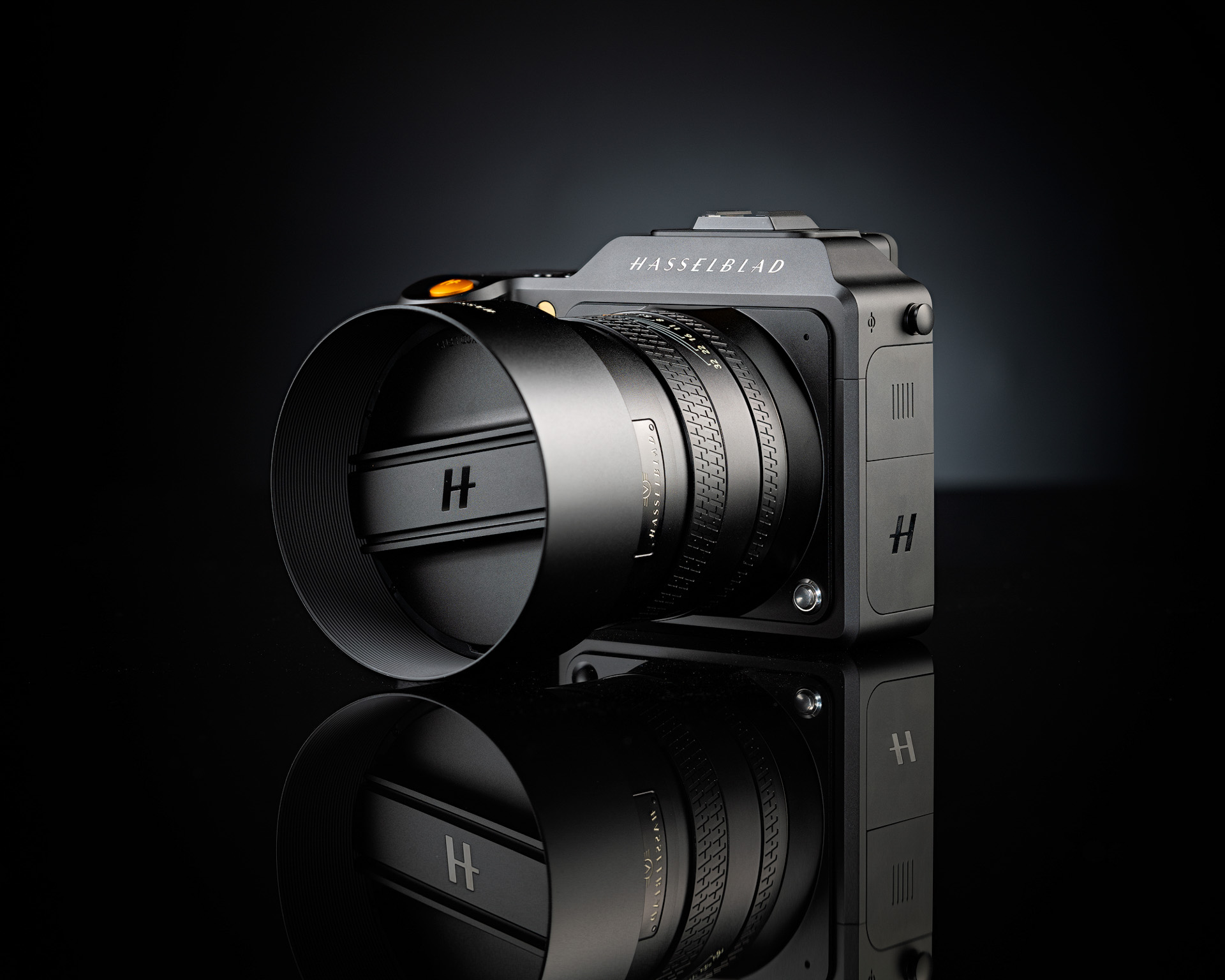
The Hasselblad XPan, a legendary film camera with an extremely distinctive way of rendering images. In the digital age, we play with that unique wide frame ratio for a fresh, interesting photographic experience.
By Daran Wu

Origins
Has anyone heard of the XPan? In the film era, the XPan was a fascinating camera — it joined two frames of 135 film (36mmx24mm | 3:2) together, forming a special 65mmx24mm (17:6) wide frame ratio.

So what's the benefit? First, the XPan loads 135 film — and since larger film area records more detail and quality, the XPan could produce image quality approaching 120 film with just 135 film. You could say it combined the compactness of a 135 camera with the image quality of 120 film.
Note: The first XPan was born in 1998; the last XPan II ceased production in 2006.
But today we won't talk about the XPan camera itself — instead, let's talk about the cinematic sense of vision it brings.
The Sense of Vision
In ordinary 3:2 or 4:3 photos, we habitually look for one focus or subject in the frame. But in the wide-frame world, you can often arrange two or even three visual focal points — so more elements fit into a wide image, and the frame becomes richer.


As mentioned, the wide frame better matches the range of human vision — it feels more like seeing with your own eyes, the image feels expansive, and the immersion is stronger.

Hasselblad X1D II's XPan View Mode
Although the XPan is discontinued, in the digital age we can relive the 65x24 wide photographic experience through the XPan crop mode of the Hasselblad X1D II-50C.

With the XPan film camera's frame ratio (65mmx24mm), the focal-length field-of-view conversion to 135 is roughly (0.55x)
45mm = 25mm
90mm = 50mm
And with the X1D II's frame (44mmx33mm) cropped to the wide ratio, the actual sensor area used is about 44mmx16mm, with a 135-equivalent conversion of roughly (0.82x)
45mm = 37mm
90mm = 74mm
Although the imaging area medium format uses is far smaller than film, the digital age has the advantage of high resolution — good image quality still comes through after cropping.
The XCD 45 F3.5 is a great entry-level lens choice for shooting XPan view, giving roughly a 37mm field of view — close to the original converted focal length. Wide open there's still vignetting around the edges, but stopping down to F8 greatly improves it.
If you adapt medium format lenses — say HC or native XPan lenses — since they were originally designed for a larger frame, their image circles cover the X1D II's sensor well, so vignetting is noticeably improved.
.
Thoughts
Photographing in different frame ratios feels like shooting with different cameras — photographic thinking and flow get a new vibration, and along the way you see the world from new angles. Photography is still so interesting.
Some XPan views from daily life below.
Further reading:
Hasselblad XPAN — a film camera that shoots cinematic frames
A Different View: Hasselblad XPan


5mm F3.5

+ xpan 45mm F4
Further reading:
Hasselblad XPAN
A film camera that shoots cinematic frames — Hasselblad Xpan
Hasselblad XPan
A Different View: Hasselblad Xpan
Share this story