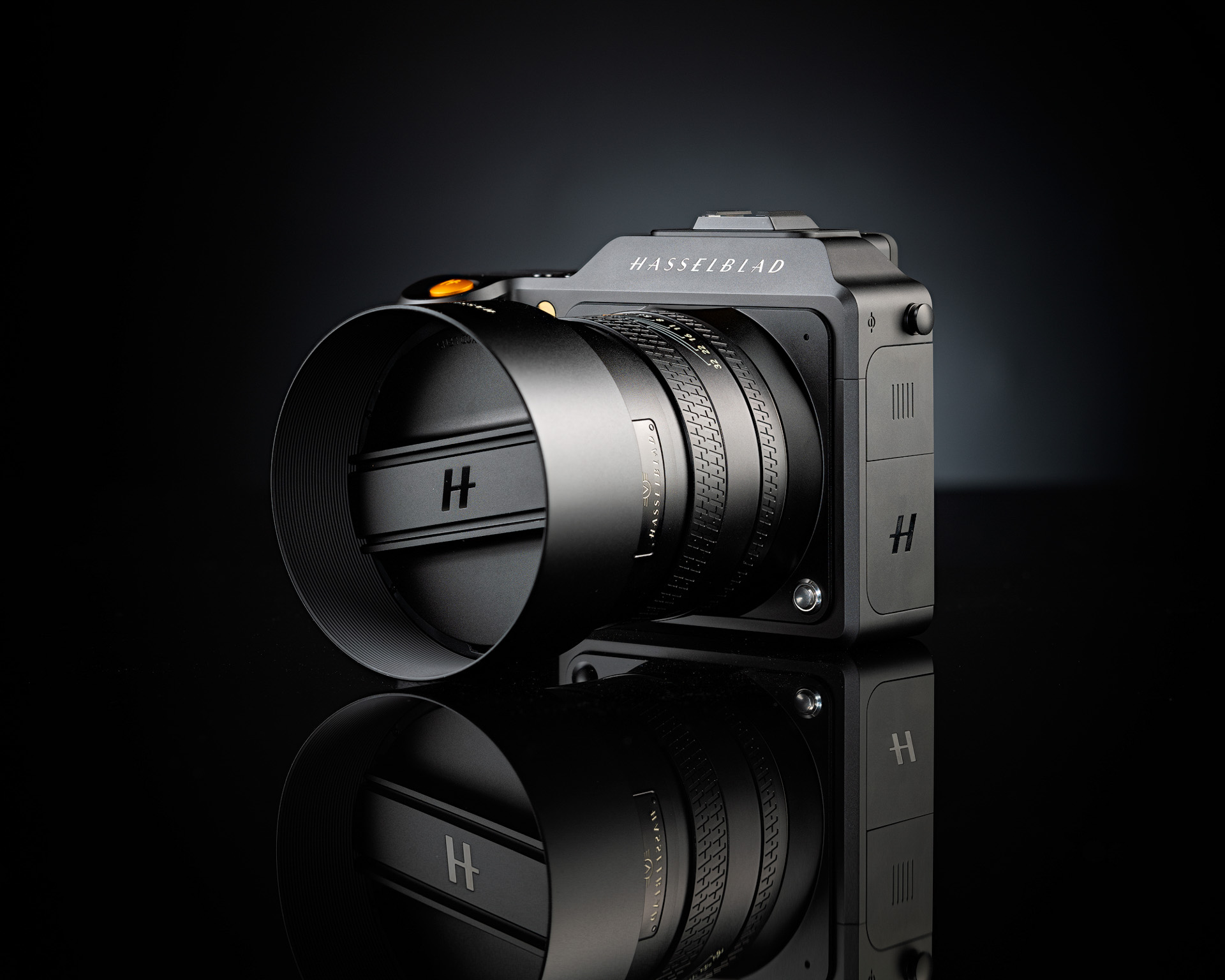
X1D II
By Daran Wu


Preface
Ever since buying the Hasselblad X1D II, I've wanted to write an article about the camera — but laziness kept delaying it. There's always a trigger that finally brings the words out, so let's begin!

Why Hasselblad
As a professional photographer, I know all about camera performance — each system's character, strengths, and weaknesses are a Google search away. Realistically, choosing Fujifilm's GFX would be the more reasonable choice — so why did I end up choosing Hasselblad?
Beyond functionality, a camera's "sense of ownership" is also a very important part — and this is usually where camera systems diverge. Take my current workhorse, the Sony Alpha series: it's an excellent camera that basically meets all shooting needs. But beyond my work ystem, I also love those traditional classic old cameras — looking at the body's line design, the choice of materials, and the mission and purpose given to the camera, feelings naturally well up inside.
Take my Leica M3! A mechanical camera over fifty years old — older than me. Carrying it out for a day, I might press the shutter only two or three times, but just having it in my bag completes the ritual of going out. The feeling of ownership is wonderful, because what you hold is a classic — and even better, when you capture a photo you love with it, that sweetness is returned doubled.
“Brand identity” is an affirmation in a photographer's heart. Some people just love its exterior design, others love its story and philosophy — there's nothing specific about it; in a single glance, you know whether you've fallen in love.
I previously used the Hasselblad H1 — my first encounter with Hasselblad — shooting with a Phase One P25 digital back. By today's standards the image quality was quite good, but only at ISO 100–400, and it came with a painfully slow back (2 seconds per shot), plus weight and battery issues — after all, nearly decade-old electronics.

With the improved X1D II-50C, the first generation's overall sluggishness was addressed — boot time improved from 8 seconds to 4, and the LCD's resolution and refresh response were upgraded, bringing the X1D II-50C closer to practical performance. What captivated me most, I think, was Hasselblad's image films and their tasteful website design and presentation — I consider it an overall design combining artistic sensibility and design sense, quite, quite outstanding. With designed copy and comfortable layout and colors, I admit it! I just fell for it — my heart told me: hey brother, shouldn't you take one home?
Compared to the X1D-50C, the new X1D II-50C keeps 50 megapixels, 16-bit color depth, and 14 stops of dynamic range, with a few changes including:
Screen enlarged from 3" to 3.6" (from 920K to 2.36M dots)
46% faster boot
Burst speed from 2.3fps to 2.7fps
Live View refresh rate from 37fps to 60fps
Weight reduced from 725g to 650g
Shorter shutter lag
Shorter image playback time
Official website
https://www.hasselblad.com/
https://www.hasselblad.com/zh-cn/ Chinese version

Long-Term Thoughts on the Hasselblad X1D II (Pros and Cons)
For me, the X1D II-50C isn't just a camera to admire — I hope to also use it for work shooting. But medium format cameras aren't as full-featured as full-frame ones, so let me share my user experience from these days.
Pros
Size
Screen
UI design
Color and tonality
Lenses
Cons
Autofocus
Burst speed
Blackout
Electronic shutter
Battery

Size
I bought the X1D II-50C at the end of 2019. My original idea was to bring it along when traveling for work — the compact, simple size was something I cared about a lot. Many times I don't want to carry a pile of gear, especially for street travel — I'd rather carry just one camera with a simple sling bag and weave through the streets. If this camera couldn't fit in my sling bag, that would truly be a disaster — I'd have to carry a bigger bag, and then... I might as well bring other cameras.
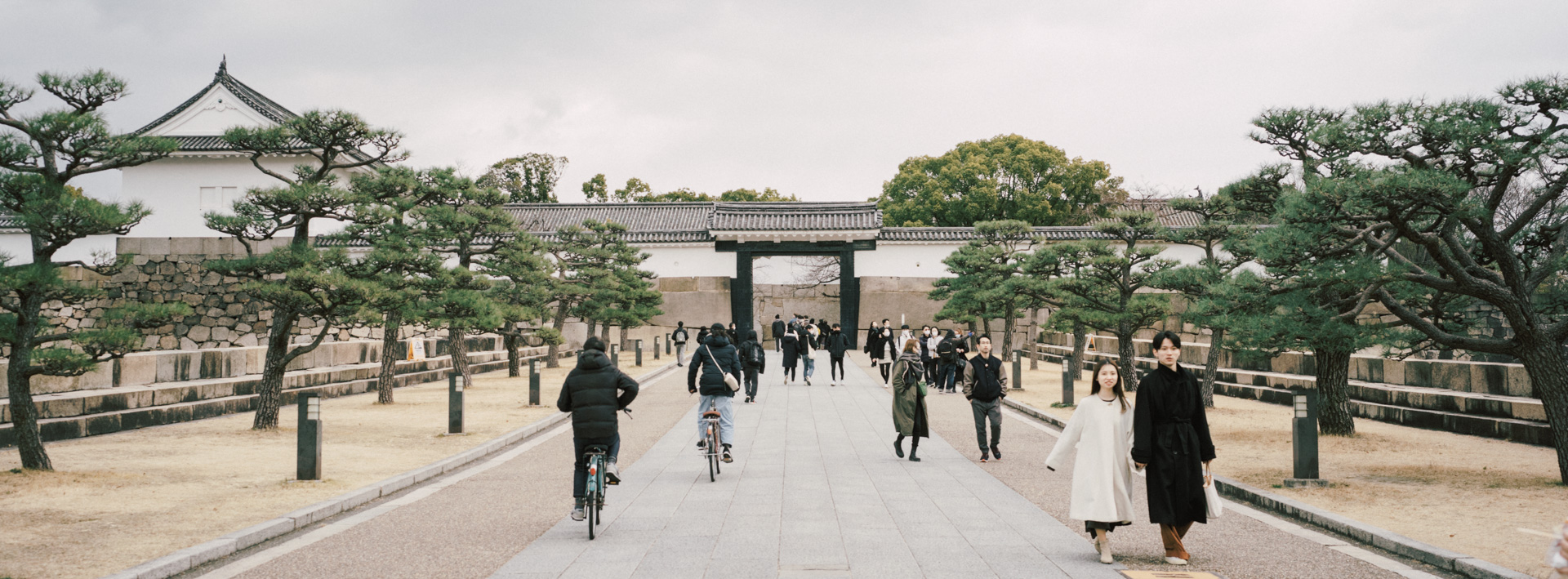
The X1D II-50C is the most compact medium format camera, easily fitting in my 5L sling bag — and I'm more willing to take it out. You can see my series Melbourne Light Chaser | X1D II 50C — street photos from when I worked in Melbourne in 2019, which proved the advantage of its compact size.

Screen
Once you've used a big screen, it's hard to go back to a small one. The X1D II-50C has the biggest screen of any camera I've used — photos look very clear when browsing, and the biggest highlight is the excellent, faithful color reproduction, which makes it easy to check the mood of photos while shooting. The X1D II-50C supports touchscreen — zooming and panning through photos works just like a phone, with your fingers.

UI Design
Used to the complex menus of Japanese cameras, the first time I used an icon-based menu I wondered — how can it be this simple? Is it enough? But when actually shooting, you really only use a few functions. The X1D II-50C's menu operations can always be found within three levels, and you can customize frequently used menus — actually quite convenient and intuitive, close to the experience of operating a phone. The tradeoff is relatively fewer controllable options.

Color and Tonality
Hasselblad has always emphasized its "Natural Colour Solution (HNCS)", claiming it won't sacrifice one subject's color accuracy to gain another's (see this link for more detail) — though that claim is based on using the official Phocus software, which achieves maximum color reproduction. My workflow is Lightroom plus my own presets, and presets already greatly reduce color differences between systems, so I'd rather explain from a "color preference" direction.
Comparing my Sony A9 II and Hasselblad X1D II 50C with the same settings: the Sony A9 II gives me roughly what I want (usually just brightness needs adjusting), while the X1D II 50C's colors run cooler. But since my presets were developed from Sony files, they're already optimized for Sony photos — applied to Hasselblad, the difference isn't that big.
The biggest difference between the two systems is that Hasselblad has 16-bit color depth versus Sony's 14-bit. Greater color depth renders highlight/shadow and color transitions more naturally and smoothly, and the larger sensor gives each pixel more light-gathering area, with better performance in detail and dynamic range.

Lenses
Unlike the old HC lenses, XCD lenses are modern lenses developed for the new system — their resolving power fully supports the 50-megapixel medium format sensor, with sharp, steady, solid imaging and a larger image circle that keeps edge quality excellent. Interestingly, different lenses have different focus speeds, different focus sounds, even different shutter sounds. Since XCD lenses use leaf shutters, they can sync flash at all shutter speeds — very convenient for studio photographers using strobes, though I rarely use studio lights so I can't enjoy that benefit.
Besides the latest XCD lenses, old HC lenses are another direction — though they need an adapter, the imaging and bokeh character remain very good. Of course wide open, sharpness and detail struggle a bit compared to modern lenses; stopping down 1–2 stops greatly improves the lens's quality, and there's a big cost advantage in acquiring these lenses!
I'll write another article later to share more about lenses.
Hasselblad's XH 0.8x focal reducer is really great for friends adapting HC lenses — with it you can achieve a 54x40 lens conversion.
==HC 100mm F2.2 x 0.8 focal reducer x0.8, 44x33 frame = 65mm F1.8 equivalent in 135 terms (roughly the conversion of 100mm on a full 645 frame (54x40))==

Autofocus Speed
Autofocus speed is probably the pain point of all medium format systems, but by today's full-frame standards, the X1D II-50C is really a bit slow. Why? The X1D II-50C uses contrast-detect AF, which is fine in good light, but in poor light or low-contrast situations the problems show. Another issue: when crossing a long focus throw, the lens hunts before focusing. For example, if I shoot a half-body portrait and then step back for a full-body shot, the focus throw is long, so the lens hunts once before starting to focus.
This is because the leaf shutter design determines its focus throw — and the complex shutter-and-lens construction makes it unlikely to achieve the fast focusing of full-frame ultrasonic lenses. So when focus crosses a certain distance, the lens gives itself a focus throw for readjustment — what we call hunting.
In other words, once the lens completes its first focus adjustment, it locks into that range — and continuing to focus within that range speeds things up a lot.

Blackout
This is probably one of my least favorite parts — after every shutter press, the screen goes completely dark for a while (about a second), so I can't see the subject's state in real time. For fast-paced wedding shooting this greatly affects judging the next shutter moment, though for general travel or lifestyle shooting it's acceptable.

Electronic Shutter
Due to the leaf shutter's inherent limitations, the X1D II has no physical shutter curtain (the Fuji GFX does), and without a global-shutter sensor (like the Sony A9), the sensor needs time to scan light from top to bottom — so with the electronic shutter you need to stay still for about 1/3 second to get an undistorted photo. This is a big problem for people adapting lenses, since every shot must keep subjects as still as possible, greatly reducing the versatility of adapting.
But in practice, playing with different adapted lenses is still fun — with a little practice, you can still get successful shots!

Battery
The X1D II's power consumption is a bit fierce by current camera standards — without good power management, one battery might not even last two hundred shots! If you expect to shoot a lot, best to bring two batteries, or have a Type-C power bank for charging on the go — more reassuring. And after a few minutes of use, you can clearly feel the body temperature rise — an advantage when shooting in winter? Haha.

Summing Up the X1D II
When someone asks me which medium format camera I'd recommend, Hasselblad or Fuji — I usually suggest the Fuji GFX system first, because for friends chasing speed, the X1D II's weak autofocus and relatively slow body response will surely disappoint. The Fuji GFX is a relatively complete system (jealous...), superior to the Hasselblad X system in overall body performance, lens lineup, and price.
But that's how people are — sometimes the standard by which we measure things isn't rational; the emotional inside influences us more.
I think Hasselblad wants photographers to spend more energy and thought on the essence of shooting, not just chasing spec numbers (though I feel that with the industry's progress, Hasselblad is clearly falling behind in electronics R&D!). Obsessing over every drop of image quality in lenses, being serious about image color — Hasselblad's development is as conservative and cautious as the Germans.
Finally, I want to share something a friend said in our LINE group, which I think perfectly expresses why we want a Hasselblad:
No matter how strong a GTR is, it's still just a Nissan — an ordinary Porsche is better at impressing the ladies!
If you're obsessed with a camera's design taste, compact size, Hasselblad's unique image tones and gradation, and can enjoy the fun of slow shooting — add a bit of expensive faith, and I think owning a Hasselblad means finding that last shard of soul in your heart!


延伸連結:
Hasselblad XCD 80mm F1.9 | 哈蘇迷一定要擁有的王者之鏡
https://camera-forest.com/hasselblad-xcd-80mm-f1-9/
Illusion of Maze: 幻相の迷宮 | Hasselblad 503CXi
https://camera-forest.com/illusion-of-maze-hasselblad-503cxi/
Share this story