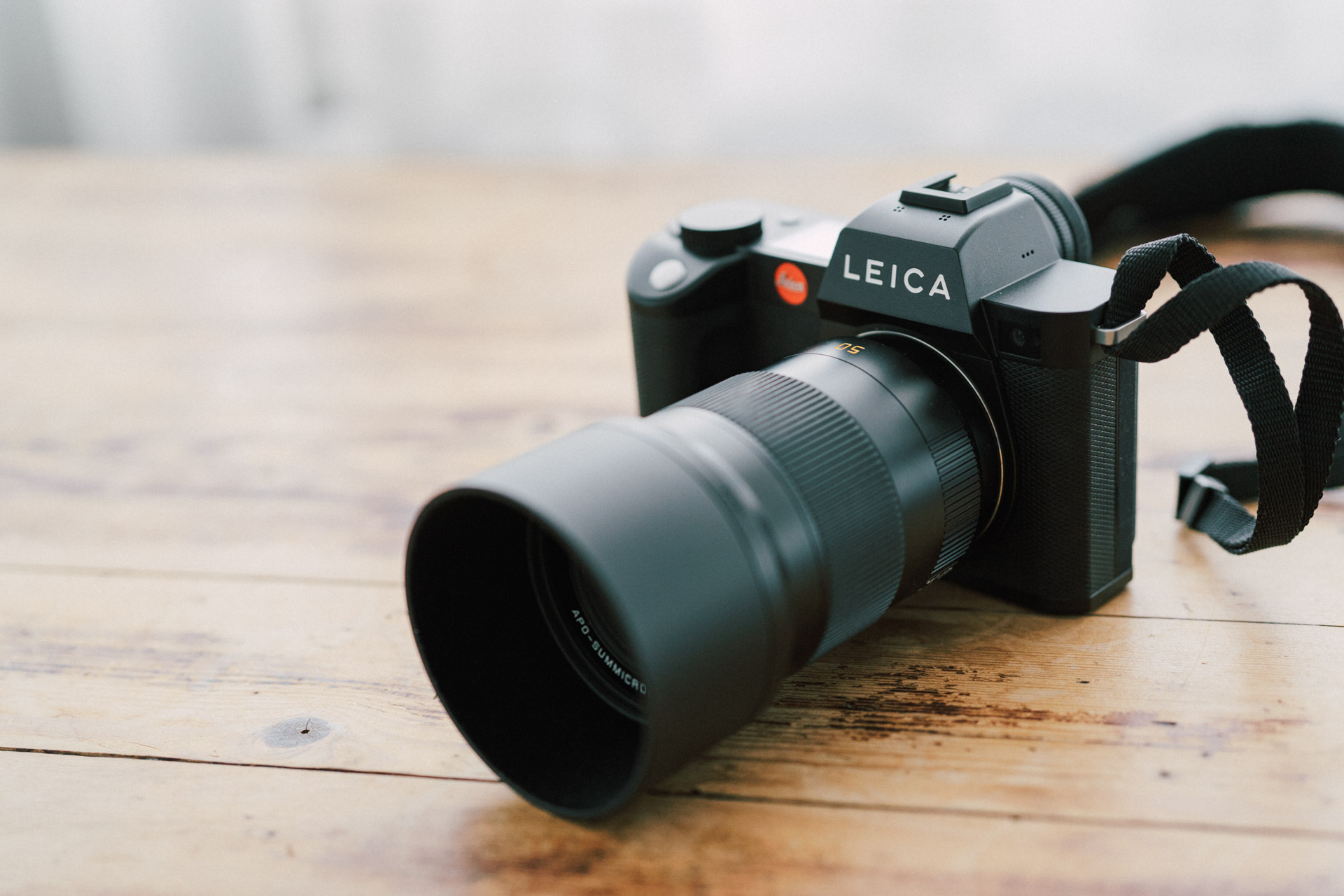
The Summilux-SL 50mm f/1.4 ASPH — the fastest lens in the Leica SL system — is a dream choice for many photographers. But what makes it special for a working professional? We've invited Taiwanese-American professional photographer Aaron Liu to share his experience.
By Aaron Liu
Introduction
Many may wonder about the Summilux-SL 50mm f/1.4 ASPH on the Leica SL system: the M system's Summilux-M 50mm f/1.4 ASPH is small, light (335g), optically excellent, and works great via Leica's own M-to-L adapter — so why give up that little gem for the SL system's Summilux-SL 50mm f/1.4 ASPH?
Leaving image quality aside, this lens is at least three times the size and weight of the M system's Summilux-M 50mm f/1.4 ASPH (1065g) — a considerable presence on the Leica SL2 or SL2-S. And the SL system already has the optically exemplary APO-Summicron-SL 50mm f/2 ASPH, whose size and weight are quite acceptable.
So who is the Summilux-SL 50mm f/1.4 ASPH for — and does it really deliver a noticeable step up in image quality?

M vs. SL
Many say the Leica SL, SL2, and SL2-S are the best cameras for M lenses. They accept M glass via Leica's own M-to-L adapter, and Leica designed the SL system with this in mind from the start — special treatment in front of the sensor keeps adapted M lenses performing excellently, especially at the frame edges.
These SL bodies also have very bright, high-magnification EVFs — a big help for focus-peaking with M lenses. I've shot this way myself, from the original SL through today's SL2 and SL2-S, with the Summilux-M 50mm f/1.4 ASPH as my most-used lens for portraits and weddings. But while this combo works for slow-paced or repeatable shoots, it falls short when fast, precise autofocus is needed. That's when you wish the lens had autofocus — so the camera handles focusing while you concentrate on composition and the decisive moment.
In other words, adapting M lenses to SL bodies, I genuinely enjoy manual focus — and compared to the M system's rangefinder and zone focusing, the SL system's focus peaking is easier with a higher hit rate. But in certain situations, shooting critical frames manually still feels risky and unsettling.
Since the SL system was never constrained by size or weight, Leica could go all-out with the finest glass and most advanced optics in SL lens design. SL lenses' resolution and image quality exploded into a whole new realm. Comparing 50mm lenses at the Summilux ASPH level, the SL version's image quality is simply beyond the M version's reach.
You could argue the M 50mm is a much older product and the comparison is unfair — I agree. The M 50mm has a distinctive humanistic character and film-like feel, unlike the SL 50mm's "perfection" — I agree with that too. But as sensor resolutions climb year after year, SL lenses genuinely "feed" these high-resolution cameras better than M lenses can.


Summilux-SL vs. APO-Summicron-SL
I used the APO-Summicron-SL 50mm f/2 ASPH for a while — its maximum aperture is its working aperture (then again, which Leica lens isn't?). Sharpness and resolution are phenomenal. Compared to the Summilux-SL 50mm f/1.4 ASPH, it's more compact (740g) with a much shorter minimum focus distance (35cm for the APO-Summicron-SL vs. 60cm for the Summilux-SL). Its only regret is the f/2 maximum aperture — the main reason I ultimately switched to the Summilux-SL 50mm f/1.4 ASPH.
Despite the Summilux-SL 50mm f/1.4 ASPH's bulk, weight, and long minimum focus distance, I still prefer the larger aperture — it gives me more creative room, especially in portrait bokeh and low light, where one extra stop often drops ISO from 6400 to 3200 for a cleaner image.
In rendering, the Summilux-SL 50mm f/1.4 ASPH holds its own even against the APO-Summicron-SL 50mm f/2 ASPH — I find its images have a distinctive oily smoothness. Whether tight portraits or distant environmental shots, the photos look wonderfully comfortable. In-focus areas are delicately rendered, out-of-focus areas silky smooth, with natural focus transitions — the overall rendering feels painted with a watercolor brush. Visually distinct from the APO-Summicron-SL's pursuit of the ultimate.
I also noticed something interesting: the Summilux-SL 50mm f/1.4 ASPH costs $900 more than the APO-Summicron-SL 50mm f/2 ASPH.


Autofocus
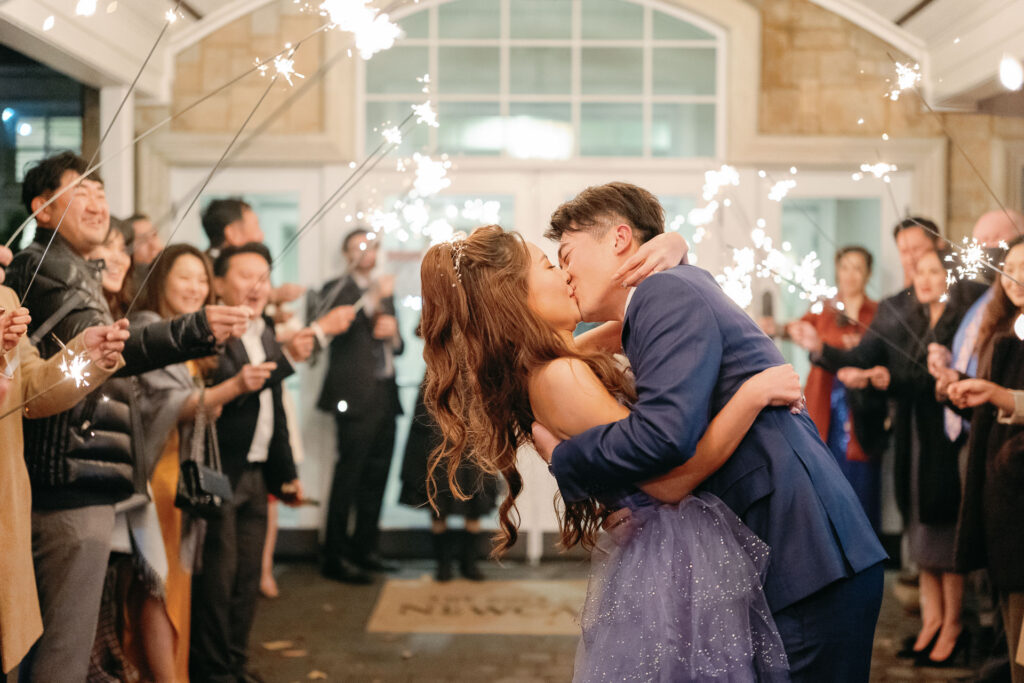
SL lenses' advantage is autofocus support. Since the Summilux-SL 50mm f/1.4 ASPH uses more — and heavier — glass, its AF speed barely passes. In my experience, if the subject isn't moving fast, paired with an SL2 or SL2-S on the latest firmware, both single and continuous AF perform well with good accuracy. For general portraits and American-style wedding coverage, autofocus is trustworthy. But compared to Sony or Canon, you'll be disappointed.

Manual Focus
Where manual focus is needed — video, for example — SL lenses offer an excellent linear manual-focus experience. On the SL2 and SL2-S you can set the manual focus throw; I usually use 120 degrees. In practice, I find SL lenses' manual focus nearly on par with M lenses.
In the mirrorless era, new-generation lenses almost all use focus-by-wire manual focus. Even high-end lenses offering linear manual focus still feel noticeably laggy — but SL lenses give me clear, reliable feedback, with focus right where I turn it.
Further reading
Leica SL2 + APO SL 50mm F2 First Experience

Conclusion
If you own an SL2 or SL2-S and love the 50mm standard focal length, I highly recommend the Summilux-SL 50mm f/1.4 ASPH — it fully unleashes the SL system's performance. Paired with the SL2's high resolution, its rendering rivals medium format image quality.


Share this story