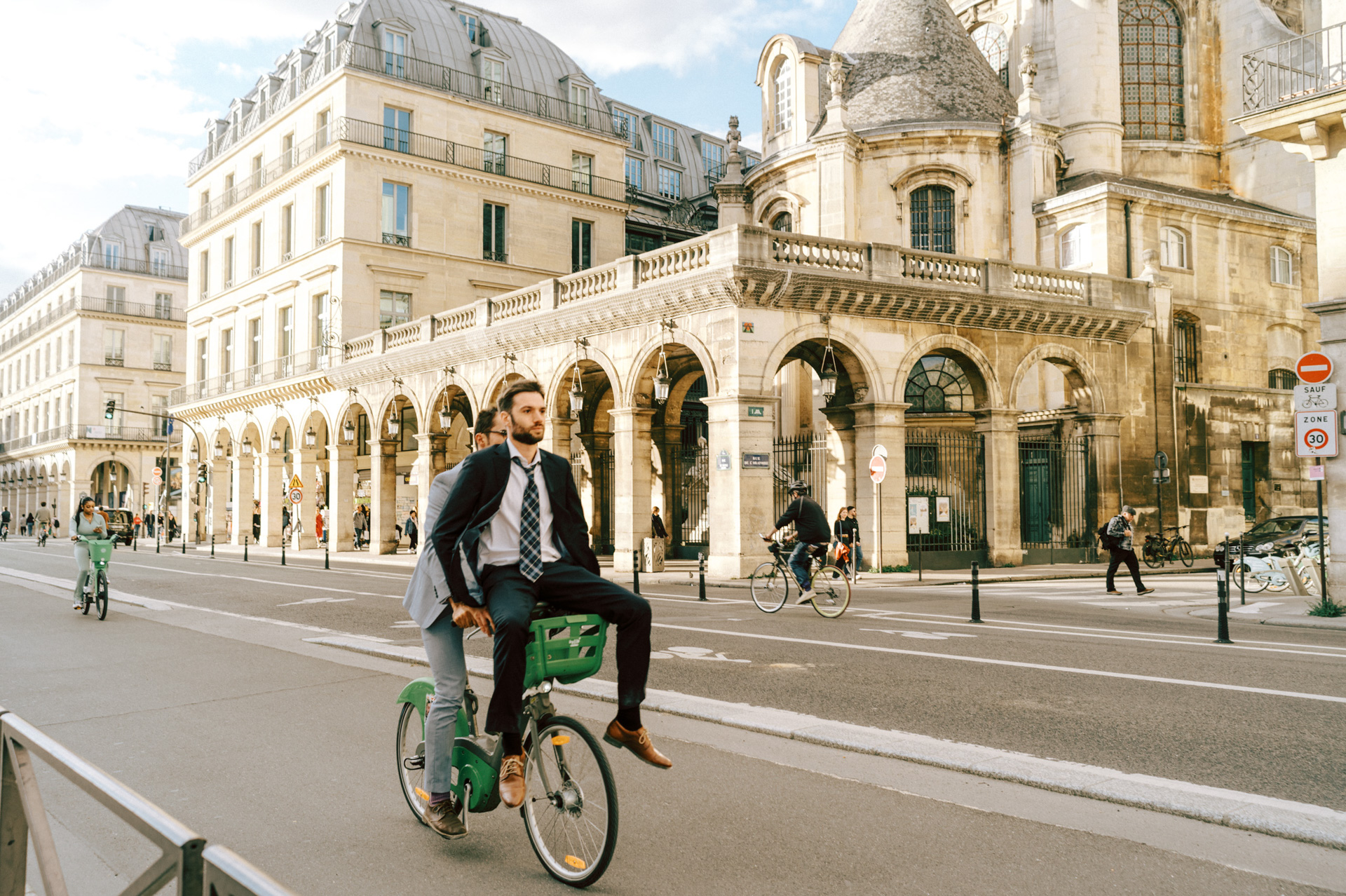
The Zeiss ZX-1 is an extremely rare camera in Taiwan — yet so mysterious and captivating. As Zeiss's first fully self-developed full-frame compact camera, this time Xiaojian Tang walks us through this creative Zeiss camera.
By Xiaojian Tang

"Immerse yourself in the image — shoot as you please."
Remember the Loxia 25mm I shared not long ago? (If you missed it, see here.) In that article I mentioned my dreams for Zeiss — and for a century-old optics company, those dreams are big enough to hold several of mine. The most delightful one: the Zeiss ZX-1, which I've been longing for day and night since its 2018 announcement.
[Carl Zeiss, ZX1]
Founded in 1846 and now celebrating its 175th anniversary, this world-leading lens maker — whose little blue badge intoxicates photographers — entered the 21st century by releasing its first full-frame compact digital camera. Whatever its fate, this camera is a bold, defining stroke in Zeiss history.
The first full-frame digital camera in history was Zeiss's N Digital, announced in 2000 and released in 2002. To my then young and naive self, that pioneering spirit shook me deeply — but I was in no position to take part. So when the ZX-1 was announced in 2018, I told myself I had to get one no matter what.
After the passage of time and countless browses of B&H, eBay, and Ruten… by chance I asked Zeiss Taiwan's distributor, Cheng Seng Group — and then………

(All photos below have been retouched to varying degrees)
[First Impressions]
Zeiss is always different — and the ZX-1? I think the character "青" (a cool, bluish-green) sums up my entire first impression. Unlike the usual Zeiss look with its slightly red, vivid punch, the ZX-1 renders a peculiar melancholy — a calm, cool temperament, somewhat like the Leica Q, yet even more like an alpine flower, hard to approach.

Matching that unapproachable character, the camera's operation is ultra-willful minimalism: a gorgeous 15-second boot animation (I later discovered a standby mode for quick on/off), and just one physical button on the back (AEL/AFL) — a bucket of cold water on my excitement.
[Continuing the Story]
This camera's arrival inevitably invites a showdown with the eternal friend (Sony) and the eternal rival (Leica). If Zeiss pioneered the full-frame digital vision, Sony is the originator of the full-frame compact — the 2012 RX1 with its Zeiss 35mm F2.0 stunned the world, and my heart still races thinking about it. (See: The Full-Frame in Your Palm: A Brief, Beautiful Encounter with the RX1.) Then the 2015 Leica Q arrived with a bolder 28mm F1.7 spec. Under the long shadows of these two legends I kept wondering… what about Zeiss? When would it release its own full-frame compact? In 2018, the ZX-1 — carrying the RX1's promise in a single changed letter, with the same Zeiss 35mm F2.0 — boldly challenged its greatest rival, the Leica Q. So what specs could such a unique camera offer?
Zeiss ZX1 Key Specs:
⦿ 37 MP full-frame sensor
⦿ 255 focus areas
⦿ ISO 80–51200
⦿ Up to 3 fps continuous shooting
⦿ Lens: Distagon T* 35mm F2.0 (5 groups, 8 elements)
⦿ 0.7" 1080p OLED electronic viewfinder
⦿ 4.34" 921k-dot capacitive touch curved display
⦿ Built-in 512GB storage
⦿ 4K (3840×2160 30fps) and 1080p 60fps video
⦿ Android OS, runs Adobe Photoshop Lightroom CC

[Lightroom & Upload???]
It runs Android and can run Adobe Photoshop Lightroom CC — seeing that spec, I bet everyone thought of opening the app store to download Meitu or VSCO first. But in practice this side of the design feels rather limited: cloud and editing remain semi-closed, and after long study I still couldn't figure out uploading to personal cloud or phone, so I won't dwell on it.
As for Lightroom, Zeiss boldly removed the picture-style options nearly every camera has — there is no way to adjust color while shooting at all; everything is left to in-camera editing or post-processing on a computer. That's one of this camera's defining traits.
The first hurdle in Lightroom editing is the login requirement — having long forgotten my desktop account, I could only browse the features roughly (without login, applying styles and guided edits are unavailable). What impressed me most: built-in one-tap auto edit and custom style presets — edit one photo to your taste in-camera, then apply that style to the rest. Very, very cool.
…………But as a member of the ancient tribe, I still transferred everything to my computer for post-processing.
The three below were edited in-camera, then transferred to computer, resized, and uploaded.


[In the Field]


But through sporadic shooting, I gradually got used to its bad temper and slow pace — and gradually fell for this texture so different from my usual style.
As a 35mm carry-everywhere camera, shooting food feels like its calling. Many of its straight-out-of-camera food shots carry that greenish "青" cast with a peculiar narrative feel — but after slight editing at home, they turn out surprisingly, remarkably textured.


Two deliberate close-ups to examine the bokeh — transitions delicate and natural.


A senior photographer once told me that every Zeiss lens's dimensionality and color transitions deserve savoring. Back then, shooting mostly ZA lenses, I couldn't grasp it — but unexpectedly, on the ZX-1 I tasted that unmistakably Zeiss yet different flavor.


The ZX-1's sense of depth is subtly hard to control: at medium distance with F2.0 it readily builds spatial depth, but at hyperfocal distances it often flattens out a little (like the three below).


Later I cracked its color code: an indescribable luminosity and fine material texture, kneading what should be strong dimensionality into something like medium format — quietly narrated yet unforgettable in every frame (though it still can't quite match the X1D..).
Eventually, the ZX-1's straight-out-of-camera color became a kind of training for me, pushing me to weave ambient light into my compositions.


In this practice, I seemed to return to that innocent pursuit of photography — and the longing and joy of shooting, and shooting, and shooting.


The sun finally came out on the last day of Lunar New Year!!


I love photographing people mid-stride, leaning this way and that — I call this style "floaty people", and this time I shot so many floaty people, I was thrilled~

After all this field testing I still rarely photographed people — but I was too eager to share before the camera had even warmed up in my hands, so here are just a few for reference.


I meant to share a brief pros-and-cons summary, but ended up posting a huge gallery anyway. Here's a quick list of pros for reference:
⦿ Pros
1. Zeiss colors; Distagon lens design with minimal distortion
2. USB charging supported
3. Beautiful packaging and co-branded PD strap
4. Fully touch interface
5. Built-in 512GB storage
6. Built-in LR with custom style presets and one-tap editing
7. Base ISO 80
8. 4.3" curved touchscreen
⦿ Areas for improvement
1. Contrast-detect AF is a bit too slow
2. The body's only button is poorly placed; no thumb rest possible
3. Only 3 fps continuous shooting
4. Overly small viewfinder
5. Overly minimal UI, easy to accidentally change settings
6. Editing design isn't intuitive (one-tap edit should be assignable to a button)
7. High-ISO performance is rather ordinary
8. Very expensive price
⦿ Fan wishlist
After this short time with it, here's what my ideal ZX-1 would look like:
1. Design inspired by the Zeiss Ikon ZM, in retro silver-black
2. Drop the EVF; let users choose accessories like a thumb rest, external flash, or OVF/EVF add-ons
3. Fast phase-detect AF is a must
4. Touch UI needs a physical button lock against accidental touches
5. Clear, intuitive one-tap editing and skin-smoothing
6. Slightly smaller body
7. More pleasing straight-out-of-camera colors
[Final Verdict]
Sharpness ★★★★☆
Color ★★★★
Bokeh ★★★
Overall ★★★☆
Whatever else, a first-generation model always carries both significance and regrettable little flaws. But out of love for Zeiss, I still hope this camera sells well — and that Zeiss keeps going, releasing the next one, even the next generation of cameras and lenses.


Further reading:
Beyond Perfect, Flawless: Zeiss Loxia 25mm F2.4 Unboxing Review
Share this story