M12 Rumour · Omotesando Flagship · Thypoch Adapter
Camera Forest News · 2026.10.23
Camera Forest News
Minor Update, Flagship Store & Adapter
Three stories this issue: Leica’s next M camera may be renamed M12 while keeping the M11 core; DJI and Hasselblad’s dual-brand flagship opens in Tokyo’s Omotesando at the end of the month; Thypoch’s full-frame AF zoom expands from E mount to five systems. About an 8-minute read.
M12 Rumour: Minor Update First
Once rumoured as the M11-R, now the M12: bigger screen, buttons moved right, M11 core carried over.
Omotesando Dual-Brand Flagship
DJI on the first floor, Hasselblad on the second — opening in Omotesando on 10/31.
24-50mm f/2.8 Mount Expansion
China’s first full-frame AF zoom expands beyond E mount to X, Z, L and RF.
Leica M12: A New Name, the Same Heart
Rumour · Compiled from Leica Rumors, Oct 22, 2026; the content is the original report’s rumour, unconfirmed by official sources
Back in June the rumoured camera was still called the M11-R; now the rumour calls it the M12. The name jumps a generation, but the substance is restrained: same sensor, same processor — only the screen and buttons change. That gap is what makes this rumour worth reading.
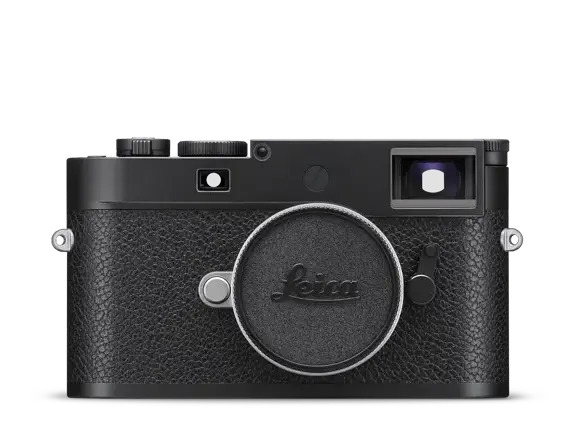
Photo | Leica (current M11-P)
Rumour, unconfirmed by official sources
Same as the M11, not Gpixel
What we know
The version circulating in June was the M11-R: early-2027 launch, bigger screen, repositioned buttons. The latest report says Leica now plans to name it the M12 directly, keeping the M11’s 60MP sensor and processor — not the new Gpixel sensor previously rumoured. The rear screen gets bigger, the buttons move to the right, bringing it in line with the SL3-P and Q3, and it is reportedly already in production.
Credibility
There are no official documents and no photos of a real unit behind this update — the source is Leica Rumors’ follow-up reporting. Notably, it walks back the bold items from the May roundup one by one: hybrid viewfinder, in-body stabilisation and a new sensor are all absent from the latest version. The smaller the rumour gets, the more it resembles a real product cadence.
Possible impact
If true, the M12 will be a handling update with an unchanged imaging core. For M11 owners, the reasons to upgrade are thin; for those still on the fence, the question becomes whether a bigger screen and a new button layout are worth another year of waiting. The real answer will have to wait for the full official specs.
Highlights
If true, the proven 60MP core carries over — stable and dependable; the bigger screen and right-shifted buttons bring handling in line with the Q and SL lines; reportedly already in production, so the wait may not be long.
Shortcomings
No specs are officially confirmed; if true, the scale of the update doesn’t live up to a new-generation model name; the Gpixel sensor rumour is overturned, so surprises are limited.
Who it’s for
People hesitating over buying an M11; M-system users waiting for the next generation; anyone following Leica’s product cadence.
Editor’s view
The model number moves forward; the core stays put.
The most interesting part of this rumour is the renaming. M11-R sounds like a minor revision; M12 sounds like a new generation — the same camera wearing a new-generation name lifts expectations. The screen and button changes are genuinely practical: once the buttons move right and match the Q3 and SL3-P, people using multiple systems no longer need to relearn anything.
But to be honest, if the imaging core really doesn’t change, this generation just smooths out everyday handling. Our way of judging it is simple: don’t let the model name lead you — wait for the official specs and check whether the sensor and viewfinder have changed. If your current M11 isn’t holding back your photography, there’s no reason you must wait.
Hasselblad Omotesando: Dual-Brand Flagship Opens
Industry news · Compiled from the PR Newswire press release, Oct 22, 2026
Japan’s first DJI and Hasselblad dual-concept authorised flagship opens on October 31 in Tokyo’s Omotesando. The ground floor is drones and Osmo; the entire second floor goes to Hasselblad — working X2D II, 907X and full XCD lens lineup, plus a gallery. One more reason to go to Tokyo.
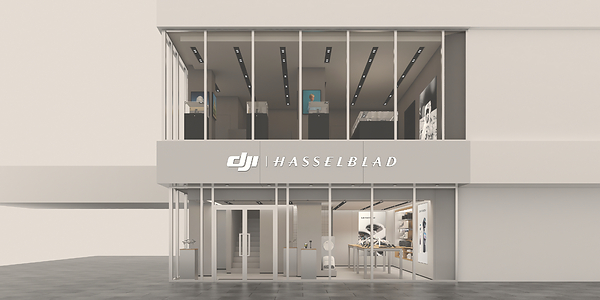
Photo | PR Newswire press release (CG concept image)
Saturday, La Porte Aoyama 1–2F
4-minute walk from Omotesando Station Exit B2
What happened
Dealer SEKIDO has announced that Japan’s first DJI and Hasselblad dual-brand authorised flagship opens on October 31 in Omotesando. The ground-floor DJI zone has drones, Osmo and an indoor flight-experience cage; the second-floor Hasselblad zone displays the X2D II 100C, 907X and XCD lenses, with a gallery and consultation space.
Background
The press release is blunt about why the store exists: high-end gear buyers want to check the feel, the image quality and the grip before buying, and to talk with people who know things beyond the spec sheet. So the store turns experience, consultation and brand worldview into a permanent flagship — staff on site, Japanese, English and Chinese support — aimed squarely at Omotesando’s international foot traffic.
What it means for you
Every display unit in the store is powered on and ready to try, and one-on-one consultations cover everything from configuration to after-sales. Photography workshops and early access to new products are planned after opening. For Taiwan readers, the next Tokyo trip gains a place to get to know the X system thoroughly before deciding — and to handle tax-free shopping at the same time.
Highlights
Working X2D II and full XCD lineup on the second floor; one-on-one consultations in Japanese, English and Chinese; a gallery and lounge that turn buying gear into an experience.
Shortcomings
All press-release images are CG, so the actual fit-out is undecided; the operator is a dealer, not a brand-run store; opening-period crowds may mean waiting for consultations.
Who it’s for
Photography lovers heading to Tokyo soon; people who want to try the X system hands-on before buying; creators who want to see both brands in one visit.
Editor’s view
High-end gear still comes down to holding it in your hands.
A medium-format buying decision is half outside the spec sheet: the grip, the shutter sound, the colour transitions on the screen — no amount of reviews beats picking it up and shooting three frames. This store’s direction is right, keeping the full lineup powered on for people to try — especially for a camera at the X2D II’s price, which was never meant to be bought on the internet alone.
The reservations should be stated up front too: the press-release store images are all CG — what the actual space looks like and how deep the consultations go will only be known after opening, and whether a dealer operator can deliver flagship-level service also remains to be seen. Best to wait for real opening reports before putting it in an itinerary; a side visit fits nicely, no need for a dedicated trip.
Thypoch Voyager 24-50mm f/2.8: The Adapter Grows
Industry news · Compiled from the press release, Oct 21, 2026; the first batch of new mounts is expected by the end of the year
Thypoch’s first full-frame autofocus zoom, launched in June for Sony E, is expanding to five mounts: Fujifilm X, Nikon Z, L-mount and Canon RF join the lineup. US$649, 432 g, f/2.8 through the range — a compact travel zoom that now works for nearly every mirrorless family.

Photo | Thypoch
Same as the existing E-mount version
E, X, Z, L, RF
What happened
Launched in June for Sony E only, the Voyager 24-50mm f/2.8 adds four mounts: Fujifilm X, Nikon Z, L-mount and Canon RF. With the same price and specs as before, the first batch is expected by the end of the year — from a single-system launch to a near-full lineup in one step.
Background
The Voyager is Thypoch’s first full-frame autofocus zoom. For a newcomer entering autofocus, a multi-mount release is a natural strategy: it widens the audience at once and signals its seriousness about the AF market. The practical test will be whether autofocus and optical performance stay consistent across each mount — the new X, Z, L and RF versions will face that scrutiny.
What it means for you
The lens is only 432 g, about 1 cm shorter than Sony’s 16-25mm f/2.8 G; with f/2.8 across the range, it’s a practical mid-length travel zoom. The key remaining question is mount-specific performance: wait for autofocus tests on your own system, and confirm the arrival date in Taiwan.
Highlights
f/2.8 across the range at 432 g; expanding from one mount to five in a single step; one of the few choices at this price band.
Shortcomings
As Thypoch’s first AF zoom, its long-term reliability record is still thin; 24-50mm is a relatively short range; arrival dates for non-E mounts are still unconfirmed.
Who it’s for
Travel photographers who travel light; mirrorless users looking for a mid-range zoom; people curious about a Chinese newcomer brand.
Editor’s view
The adapter matters more than the expansion.
The highlight is the 432 g weight and f/2.8 across the range — no one is buying this lens for its focal range alone. The mount expansion matters most for one reason: the X, Z, L and RF families finally get a mid-range travel zoom at this price, and Thypoch’s ambition to stand as a serious AF brand is clear from the breadth of the launch.
Our suggested way to read this story is also straightforward: don’t decide on the mount count alone. Check the autofocus tests and reviews for your own mount, and hold off until the first batches reach Taiwan — the lens is exciting, but it’s too early to call it a must-buy.
More news in brief
This issue’s remaining items, one line each
Leica M12 rumour: minor update first
Name jumps a generation, core unchanged — read the full story above.
DJI | Hasselblad Omotesando flagship opens 2026.10.31
DJI on the first floor, Hasselblad on the second — one more reason to go to Tokyo.
Thypoch 24-50mm f/2.8 expands to five mounts
US$649, 432 g — a compact travel zoom for nearly every mirrorless family.
Share this story