By Daran Wu
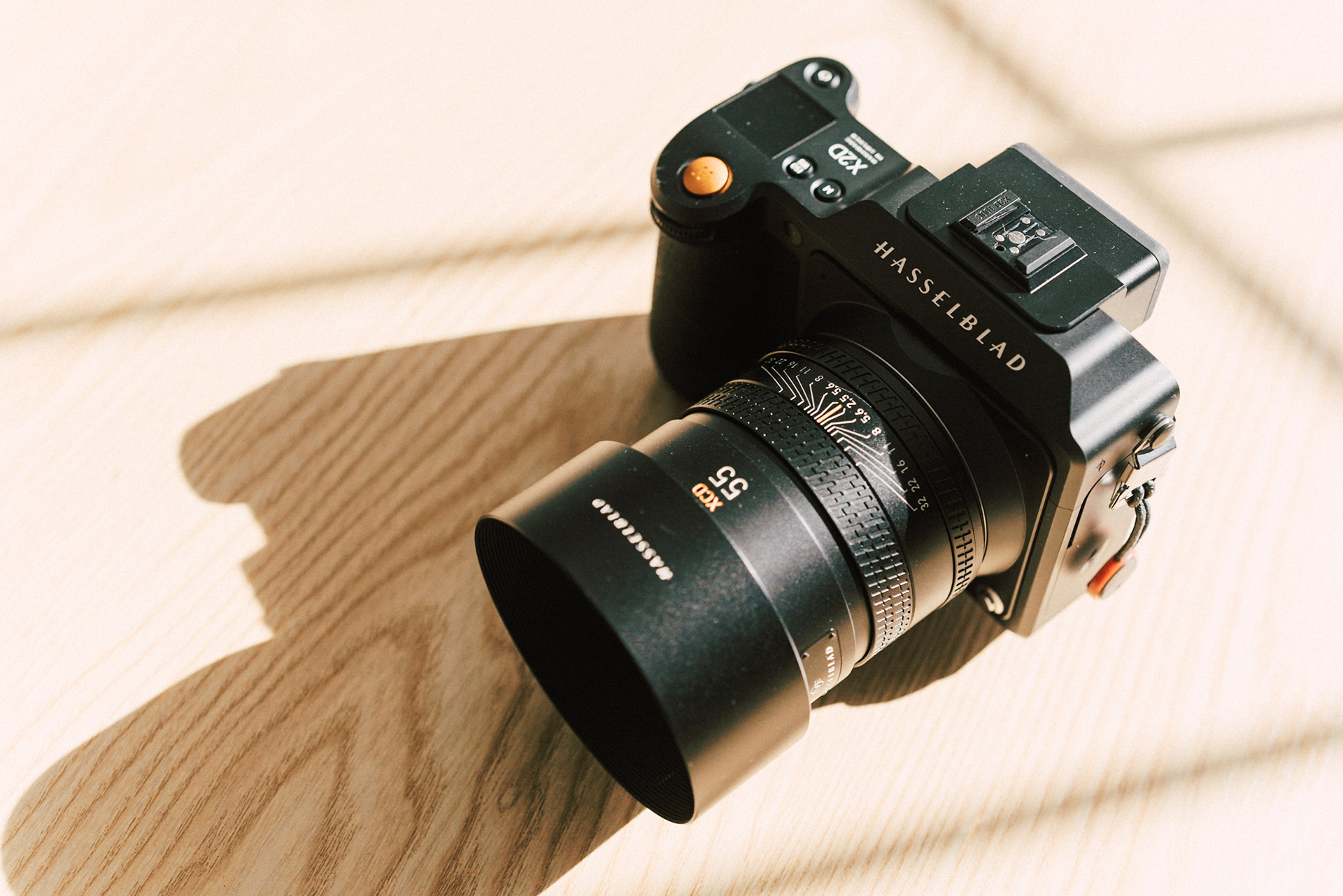
We usually call mainstream cameras like the X1D II 50C or Fujifilm GFX "medium format" cameras — but strictly speaking, their sensors aren't full medium format ("crop medium format"!). Why? Let's break it down below.
Full Frame (Sensor size: 36mm x 24mm)
This is what we commonly call full frame (the same size as 135 film) — the current mainstream standard, balancing image quality and performance.
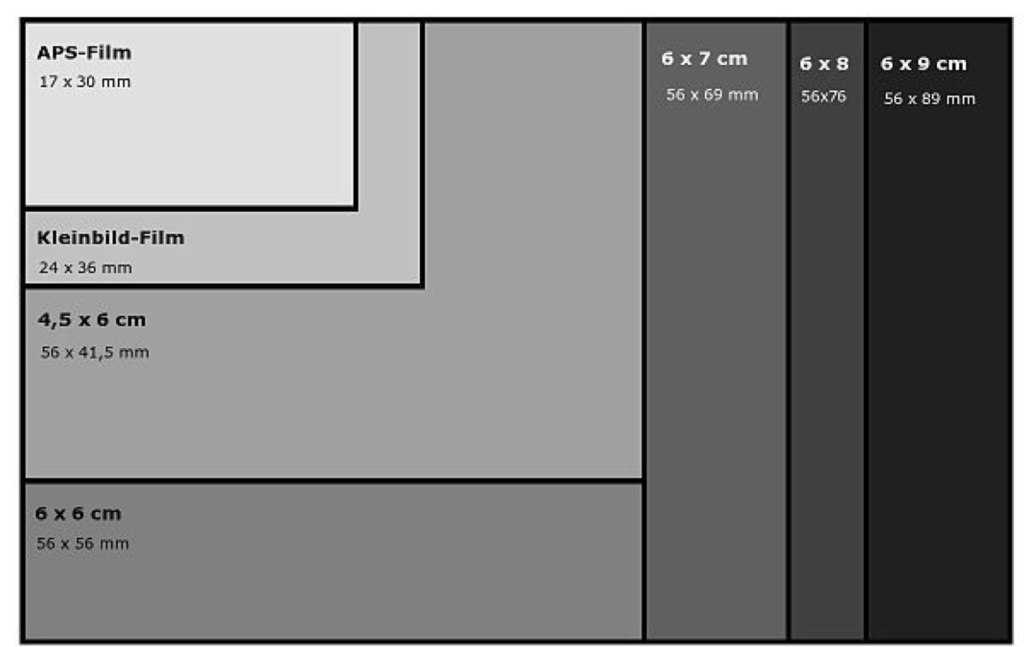
6x4.5 (Sensor size: 54mm x 40mm)
In traditional 120 film, anything larger than the 135 format's 36mm x 24mm is called medium format — and medium format comes in many aspect ratios, like 6x4.5 / 6x6 / 6x7 / 6x9. The smallest is 6x4.5, also the most common medium format size; its 4:3 ratio suits portraits, fits the most frames per roll (16 shots for 6x4.5 vs 12 for 6x6), and is used by the most cameras.
But larger sensors demand more cost and craftsmanship. Today's mainstream spec is the so-called "4433" (44mm x 33mm sensor). Why not go straight to 53mm x 40mm (I wish!)? Surely it comes down to cost and size — the bigger the sensor, the more everything changes: covering a large enough image circle requires bigger lenses, and the whole camera grows accordingly.
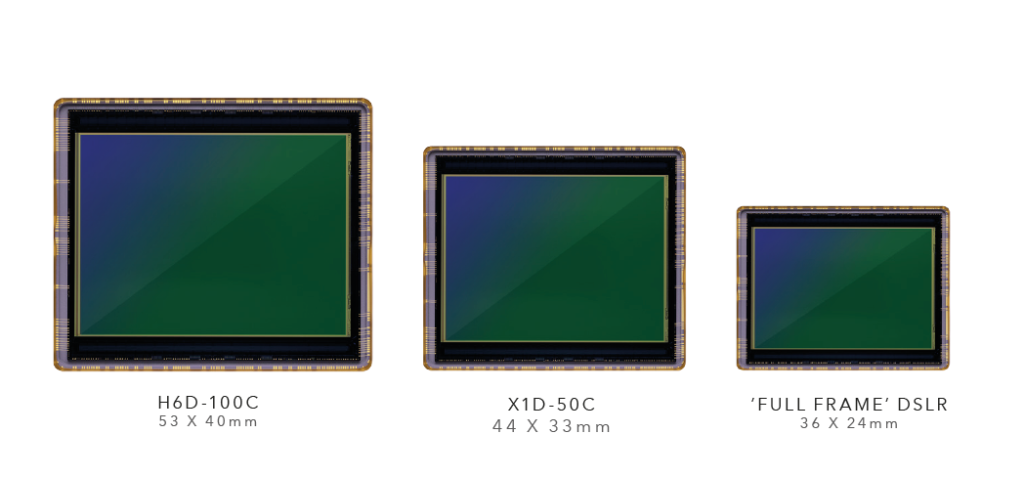
Let's compare sensor areas: 44x33 is only 1.7x larger than full frame, while the H6D-100C — with nearly 645-film-sized sensor — is 2.7x larger, and 6x7 is a whopping 4.76x. That difference in light-gathering area is what decisively sets image quality apart.
各式中片幅對應全片幅面積的倍率
44x33 》Full Frame =1.7x
6x45 》Full Frame =2.7x
6x7 》Full Frame =4.76x
Pixels vs. Area
With the same pixel count, a larger sensor gives each pixel more light-gathering area. The electrical signals sit farther apart, interfere less, and produce less noise.
Same principle explains why — within the same sensor size — lower-resolution cameras perform better at high ISO (e.g., Leica SL2 vs SL2s), while high-resolution cameras fare worse.


The Medium Format Feel
So what exactly is the "medium format feel"? Let's break it down from a few angles:
- 1. Resolution
- 2. Field of view
- 3. Tonality
Resolution
A larger sensor area fits more pixels with larger pixel area, delivering better resolving power and cleaner image quality. (Note: pixel area = the sensor area allocated to each pixel.)

Field of View
A 50mm field of view on full frame equals roughly 80mm on standard 645 medium format (54mm x 40mm). So at the same distance and aperture, medium format yields creamier bokeh — and with the longer focal length, less perspective distortion. Put simply: "telephoto depth of field with a wide-angle view" — a look distinct from full frame.
On mainstream 44x33 sensors, though, this effect is diluted: 645 format (54mm x 40mm) is 1.48x the area of 44x33 (44mm x 33mm) — think full frame vs. APS-C — so the field-of-view feel is roughly halved. Shoot with a medium format film camera (Contax 645) or a 645 digital back (Hasselblad H6D), and the difference becomes strikingly obvious.
645片幅(54mm x 40mm) vs 44x33(44mmx33mm)面積的1.48倍


Tonality
With its larger light-gathering area, medium format has more "room" for highlight-to-shadow gradations and color transitions — a big part of what makes the medium format feel.


Conclusion
Medium format hasn't evolved quickly, mainly because most mainstream manufacturers stayed out (as of 2022). The old approach of stacking image quality through sheer sensor area has been challenged by technology: today's full frame cameras nearly satisfy most needs, with smaller bodies and friendlier prices. Demand for medium format was never that strong, and the market remains relatively small.
Even so, we're glad some manufacturers remain committed to digital medium format, still chasing higher image quality, better rendering, and stronger camera performance. Today (2022), Fujifilm's GFX 100S stands as digital medium format's champion, offering mainstream full-frame-level performance with both quality and features. Could medium format become the new mainstream one day? Who knows what the future holds — let's look forward to it together!
Further reading: Hasselblad X1D II 50C — The Last Fragment of a Man's Soul
Share this story